
Compare Reverse vs Traditional Mortgages
 |
Michael G. Branson, CEO of All Reverse Mortgage, Inc., and moderator of ARLO™, has 45 years of experience in mortgage banking, with the past 20 years devoted exclusively to reverse mortgages. A Forbes Real Estate Council member, he developed the industry's first fixed-rate jumbo reverse mortgage and has been featured in Forbes, Kiplinger, the LA Times, and Yahoo Finance. (License: NMLS# 14040) |
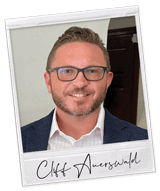 |
Cliff Auerswald, President of All Reverse Mortgage, Inc., and co-creator of ARLO™ — the industry's first real-time reverse mortgage pricing engine — has 27 years of experience in mortgage banking, with 20+ years focused exclusively on reverse mortgages. A recognized expert in reverse mortgage technology and consumer education, he has been featured in Kiplinger, Yahoo Finance, Realtor.com, and HousingWire. (License: NMLS# 14041) |
Reverse Mortgage vs. Traditional Mortgage: Which Is Best for You?
A traditional mortgage is the better tool when you can manage the payment comfortably and your priority is building equity or maximizing what passes to your heirs. A reverse mortgage is the better tool who plan to stay in the home and want additional cash flow or the flexibility and strategic use of a credit line that grows and cannot be frozen.

 Michael G. Branson, CEO of All Reverse Mortgage, Inc. and moderator of ARLO™, has 45 years of experience in mortgage banking, with the past 20 years devoted exclusively to reverse mortgages. A Forbes Real Estate Council member, he has been featured in Forbes, Kiplinger, the LA Times, and Yahoo Finance. (License: NMLS #14040)
Cliff Auerswald, President of All Reverse Mortgage, Inc. and co-creator of ARLO™ — the industry's first real-time reverse mortgage pricing engine — has 27 years of experience in mortgage banking, with 20+ years focused exclusively on reverse mortgages. (License: NMLS #14041)
Michael G. Branson, CEO of All Reverse Mortgage, Inc. and moderator of ARLO™, has 45 years of experience in mortgage banking, with the past 20 years devoted exclusively to reverse mortgages. A Forbes Real Estate Council member, he has been featured in Forbes, Kiplinger, the LA Times, and Yahoo Finance. (License: NMLS #14040)
Cliff Auerswald, President of All Reverse Mortgage, Inc. and co-creator of ARLO™ — the industry's first real-time reverse mortgage pricing engine — has 27 years of experience in mortgage banking, with 20+ years focused exclusively on reverse mortgages. (License: NMLS #14041)
Back in the 1970’s, when I started in mortgage banking, people worked hard to pay off their mortgages before they retired, so homeowners retiring with an outstanding mortgage balance were more the exception than the rule. Today, 41% of homeowners age 65 to 79 still have a mortgage with an outstanding balance owed — up from 24% in 1989 — with a median balance of $110,000, according to Harvard’s Joint Center for Housing Studies. Even when you get to borrowers older than 80, more than 30% of homeowners still make a payment every month. So a question I hear more often than not still deserves a complete answer: should the home loans taken out by older borrowers today be traditional mortgages or reverse mortgages?
Both types of loans are secured by your home, and the difference comes down to your needs, repayment ability, and goals. A traditional or “forward” mortgage requires a scheduled monthly payment until the balance is repaid. A reverse mortgage requires no monthly mortgage payment at all — the interest is added to the balance each month, and the loan is repaid when you no longer live in the home. With either loan, property taxes, insurance, any property charges, and upkeep remain your responsibility to pay.
Let’s compare the two where it counts: how you qualify, what they cost, how you receive your money, what each does to your monthly cash flow, and what each means for your heirs.
Meet the expert: Michael G. Branson, CEO of All Reverse Mortgage, Inc., and moderator of ARLO™, has 45+ years of experience in the mortgage banking industry. He has devoted the past 20+ years exclusively to reverse mortgages.
Repayment: The Core Difference
A traditional mortgage is most commonly repaid in 15, 20, or 30 years. As you make monthly payments, the balance you owe decreases and your home equity increases. This is known as a falling debt, rising equity scenario.
A reverse mortgage operates in the exact opposite. No monthly mortgage payments are required, and any accrued interest is added to the balance, increasing the amount owed over time. Repayment comes due only when the last borrower (or eligible non-borrowing spouse) permanently leaves the home, sells the home, or stops meeting the loan terms ( which would include living in the property as their primary residence, paying taxes and insurance when due, and maintaining the home in a reasonable manner).
There are no prepayment penalties on a reverse mortgage, so you can choose to make voluntary payments of any amount, any time without penalty. I know borrowers who pay their interest every month by choice, exactly as they would on a forward loan to keep their balance from rising. The difference is that when a tight month comes along, and they skip it, nothing happens except their loan balance rises. On a traditional mortgage, that same skipped payment starts receiving late notices and could result in foreclosure proceedings if left unpaid long enough.
How You Qualify
A traditional mortgage qualifies you based on income-to-debt ratios. The classic standard prefers to see your housing payment does not exceed 28% of your gross monthly income and all debts not exceed 36% of your total income. Automated underwriting systems like Fannie Mae’s DU will often draw the line at a 50% total ratio with good credit and offsetting factors, but borrowers often don’t know whether they will meet those requirements until the automated results are in. For seniors on a fixed income, it can be incredibly difficult to qualify sometimes with those ratios. I have watched borrowers with spotless credit come up short on a forward application for no reason other than the size of the new mortgage payment, or they had a car payment that pushed their back ratio up even though they had great credit and no other bills.
The HECM reverse mortgage has its own income qualification through HUD’s financial assessment. Because the loan adds no monthly mortgage payment, there is no specific debt-to-income ratio to meet — the lender confirms that after your property charges and monthly debts are paid, the borrower meets the residual income requirements as determined by the region where you live and the number of people in your family (much like VA qualifies borrowers for their loans). For example, a single borrower needs to have between $529 and $589 (slightly more if more people in your family live in the home), depending on the region where the property is located (it’s more expensive to live in CA than in AL). There is no automated system the lender needs to run; they just consider your income, the property charges (taxes, insurance, HOA dues if any), and any monthly bills you have, and as long as you have sufficient residual income, you qualify under the financial assessment requirements.
There is no minimum credit score on the HECM; your payment history is reviewed for willingness, and even credit issues can be resolved with a set-aside for taxes and insurance, rather than denial, in most cases. I have qualified borrowers whose ratios would have failed a traditional loan at 75%, because the residual income test asks a different and fairer question of a retiree: not what percentage of your income goes out the door, but whether you have enough to maintain future property charges.
Age is the one requirement that favors the traditional loan: any adult 18 or older can apply, while the HECM requires all borrowers to be 62 or older — private programs go as young as 55 in certain states.
Upfront Costs
Both loans carry closing costs — appraisal, title, origination, recording. Reverse mortgages are higher than conventional forward loans on average, and the reason is specific: the FHA mortgage insurance premium HUD charges to insure the HECM program. Like forward FHA loans, HUD charges mortgage insurance premiums on government-insured loans: 2% of the lesser of your home’s value or the lending limit upfront, plus 0.50% annually on the balance. These fees are not paid out of pocket; they are added to the loan balance.
Federally insured loans are not the least expensive loans available, and it’s important that you understand why federally insured HECM loans are so costly. That insurance is the reason your credit line cannot be reduced or frozen by falling home values, market turmoil, or even your lender going out of business — and the reason the loan is non-recourse, so neither you nor your heirs can ever owe more than the home is worth. No traditional mortgage carries either guarantee. Nearly all reverse mortgage closing costs are financed into the loan, just as they can be on a forward refinance; most borrowers come out of pocket only for the appraisal and required HUD counseling. It’s important that you understand that the up-front mortgage insurance is paid at closing. If you plan to only keep the loan for a year or two, the fee becomes very expensive. When you spread the fee over many years, the cost per year drops drastically.
» See the full breakdown: reverse mortgage closing costs explained
How You Receive Your Funds
A traditional mortgage is a closed-end loan: every dollar is disbursed at closing — paying off existing liens, covering financed costs, and delivering any cash-out — and the credit decision is final. If you need more money down the road, that means a new loan, with new costs and a new round of qualifying.
The adjustable-rate reverse mortgage is open-ended and offers unmatched flexibility. You choose how you receive your funds: a line of credit that you can draw from as you desire, monthly payments for a set term or for life, a lump sum, or any combination of those options. And you can restructure the plan later as your needs change. The unused line of credit grows every month equal to the interest rate of your note rate plus the 0.50% mortgage insurance premium, so the reserve you leave unborrowed on the line grows larger than what you originally qualified for, giving you access to more money later. One program rule to know: the fixed-rate HECM pays a single lump sum at closing — monthly plans and the growing credit line belong to the adjustable-rate loan only.
Monthly Cash Flow
A traditional cash-out refinance can put money in your pocket, and I can’t tell you how many refinance loans I’ve closed in my career. But you need to understand the trade you are making: the larger balance you owe after borrowing means a larger required monthly payment, at rates that averaged 6.66% on the 30-year fixed at the end of July 2026. It’s true that you receive your lump sum at closing, but then you spend the next 30 years handing pieces of it back as you make your monthly payment, and that’s assuming your monthly income supports a payment required to get that loan and that the monthly payment is comfortable for you to make. In my whole career, I have never seen that arithmetic rescue a homeowner whose real problem was monthly income when they got to the middle of the month and their funds were gone.
A reverse mortgage works the problem from both ends at once. It pays off any existing mortgage first, which eliminates the payment you are making today. Then, if you want income on top of that, a tenure plan deposits an equal monthly payment into your account for as long as you live in the home and honor the loan terms. Less money going out, more money coming in — for the borrower whose goal is monthly breathing room, that combination is the whole ballgame.
» Fixed income losing ground? Here is how a reverse mortgage helps you combat inflation
Impact on Your Heirs
You do need to decide what your goals are and realize the result this could have on heirs. Every forward payment builds equity, and your heirs inherit the result. A reverse mortgage spends equity as the balance rises monthly, so unless appreciation outpaces the accrual or you make voluntary payments, your heirs may see a smaller inheritance.
The reason I say “may” see a smaller inheritance is because no one can tell the future. If you take out a reverse mortgage, you will use some of your home’s equity. But the question is, will that allow you to remain in the home that you might otherwise need to leave? Can you keep the home maintained, which might otherwise be neglected, making it more valuable? Will your ability to maintain the home enhance your life or living conditions? Will the reverse mortgage allow you to save money you otherwise would not be able to set aside (remember, you or your heirs will never need to pay for any shortfall if the home does not sell for enough to pay off the balance of the loan and any funds in your bank account stay with you or your heirs).
What your heirs will never inherit is a larger loan balance than the home. With either loan, whoever keeps the home must satisfy the balance — refinance it, pay it off, or sell. The reverse mortgage adds two protections that the forward loan lacks: the non-recourse guarantee, meaning no one ever owes more than the property’s value, and HUD’s 95% rule, which lets heirs keep the home by paying 95% of its current appraised value if the balance has grown past that amount. The FHA insurance absorbs the difference — never your family’s other assets.
» Learn more: critical steps for heirs of a reverse mortgage
Spending Restrictions
Neither loan tells you how to spend your money. Once existing liens and closing costs are paid, the proceeds land in your account, and how you use them — income, repairs, care, travel, paying down other debt — is entirely your business. In more than two decades of doing nothing but reverse mortgages, I have seen proceeds fund everything from in-home care to a long-postponed trip, and the loan documents have said nothing about either. The real difference between the two loans is simply how much say you have in when and how you take the money.
Compare your real numbers: Our reverse mortgage calculator quotes rates, costs, and available proceeds across programs in real time.
Pros and Cons at a Glance
Traditional Mortgage
Pros
- Available to all borrowers 18 and older
- No owner-occupancy requirement — finance a rental or second home
- Lower closing costs on average
- Rising equity, lowering debt loan that can preserve more for your heirs at times when values are rising
Cons
- Mandatory monthly payments for decades, regardless of circumstances
- Qualifying depends on debt-to-income ratios that punish fixed incomes
- One-time disbursement — new money means a new loan
- Worsens monthly cash flow rather than improving it
Reverse Mortgage
Pros
- No required monthly mortgage payment — taxes, insurance, and upkeep remain your responsibility
- Choose your proceeds: credit line, monthly payments, lump sum, or a combination
- Unused credit line grows monthly and cannot be frozen or reduced
- Qualifies on residual income — no minimum credit score on the HECM
- FHA-insured guarantees: non-recourse protection and the heirs can repay based on amount owed or current market value (95% rule)
Cons
- Age-restricted: 62 and older for the HECM, 55 and older on private programs in certain states
- Higher closing costs on average, driven by the FHA insurance premium
- The balance grows over time, which reduces the equity left for you or your heirs
- The home must remain your primary residence
The Verdict: Which Is Better for Retirees?
There is no single answer — only the right answer is the one that is right for your situation. Here is how I frame it with my own borrowers.
Choose the traditional mortgage when the payment fits your budget without strain, and your priorities are building equity, financing a home you will not live in, or passing the largest possible inheritance or if you only plan to keep the loan for a very short time. Choose no new loan at all if you are months from selling. And if you anticipate buying your next home with the equity from this one, compare both options against the HECM for Purchase before you decide.
Choose a reverse mortgage when you are 62 or older, the home is where you intend to stay, and the goal is to live on it: eliminating a payment, adding monthly income, funding care or repairs, retiring high-interest debt, or holding a guaranteed reserve for whatever comes. For that borrower, the reverse mortgage does things no traditional loan can do — and the numbers will tell you if the loan meets your individual goals and needs
Expert Insight: “Forward or reverse, a mortgage is a tool, and tools are judged by the job. If the primary goal you want your tool to achieve is to leave as much equity as possible for inheritance, paying a payment may be your best friend. If the tool you need is one that will bring you needed cash flow (whether by giving you a payment, relieving you of an existing burdensome payment, or a combination of both), the reverse mortgage can be structured to eliminate existing loans but also either give you a line of credit you can access when you need it or possibly provide you with a fixed payment for life. It all depends on your property value and your equity position and it’s so easy to check your numbers on a reverse mortgage calculator to see if it’s right for you”.
Frequently Asked Questions
Is a reverse mortgage easier to qualify for than a traditional mortgage?
Why are reverse mortgage closing costs higher?
Can I replace my traditional mortgage with a reverse mortgage?
Does the lender own my home with either loan?
Which Loan is Best for You? Run both scenarios with our reverse mortgage calculator — real-time rates, costs, and proceeds side by side — or call us Toll-Free at (800) 565-1722.


Have a Question About Reverse Mortgages?
Over 2000 of your questions answered by ARLO™
Ask your question now!