



 |
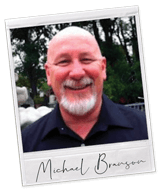
Michael G. Branson, CEO of All Reverse Mortgage, Inc., and moderator of ARLO™, has 45 years of experience in mortgage banking, with the past 20 years devoted exclusively to reverse mortgages. A Forbes Real Estate Council member, he developed the industry's first fixed-rate jumbo reverse mortgage and has been featured in Forbes, Kiplinger, the LA Times, and Yahoo Finance. (License: NMLS# 14040) |
 |
Cliff Auerswald, President of All Reverse Mortgage, Inc., and co-creator of ARLO™ — the industry's first real-time reverse mortgage pricing engine — has 27 years of experience in mortgage banking, with 20+ years focused exclusively on reverse mortgages. A recognized expert in reverse mortgage technology and consumer education, he has been featured in Kiplinger, Yahoo Finance, Realtor.com, and HousingWire. (License: NMLS# 14041) |
 Michael G. Branson
Edited by
 Cliff Auerswald
The direct answer: It depends on two things: who "the beneficiary" is, and whether the trust qualifies under HUD's rules.
- The primary beneficiary who lives in the home can sign on their own if they have legal capacity. HUD treats the trust's primary beneficiary as the HECM borrower. They sign the loan application and the loan agreement, and they sign the Note along with the trustee (HUD Handbook 4000.1, II.B.2.b.ii(5)(a) and II.B.2.a.i(3)(a), issued August 12, 2026).
- If that beneficiary lacks legal capacity, they can't sign. The application can be signed by a court-appointed conservator or guardian whose court order gives them authority to obligate the borrower. It can also be signed by an agent under a durable power of attorney "specifically designed to survive incapacity" who has specific authority and has completed HECM counseling (II.B.2.a.i(3)(b)).
- A remainder (contingent) beneficiary can't sign as the borrower. They can sign for the disabled beneficiary only if they hold that conservatorship or POA. They may also be asked to sign the mortgage itself.
- The trust has to qualify first. HUD allows a HECM on a home held in a living trust, "either revocable or irrevocable." The primary beneficiary must be 62 or older at closing, live in the home, and complete counseling. The trust must give each beneficiary a lifetime right to live there, and no new beneficiaries can be added (II.B.2.b.ii(5)(a); 24 CFR 206.33). Many special needs trusts aren't written that way. trust created by a will doesn't fit HUD's living-trust definition. Only a lender's legal review of the actual trust can confirm whether this one works.
I'm not an attorney, and I can't give you legal advice. Special needs trusts rarely come up in our industry, and some of these terms may mean something different to an attorney than they do to me. It has also been years since I worked on a loan with a special needs trust, and HUD and investors handle things a little differently now. Every trust goes through a legal review, and the attorneys decide what steps it takes to meet HUD's requirements. With that said, here is my understanding.
What is a third-party special needs trust?
A third-party special needs trust (SNT), also called a supplemental needs trust, is funded by someone other than the person with a disability. That is usually parents, grandparents, or other family. Its purpose is to pay for extras without costing the person their means-tested benefits, such as Supplemental Security Income (SSI) and Medicaid (Medi-Cal in California). Social Security describes it as a trust set up for a disabled person's "extra and supplemental needs other than food, shelter, and health care expenses that may be covered by public assistance benefits" (SSA POMS SI 01120.200, effective May 6, 2024).
These are the features that matter most:
- Where the money comes from: the trust holds assets that belong to others, such as family savings, an inheritance, or life insurance. If the beneficiary's own money goes in, that portion is treated as a first-party trust under different rules (SI 01120.200).
- Benefit protection depends on the wording. For SSI, the money in the trust isn't counted as the beneficiary's resource as long as the beneficiary can't revoke or end the trust or direct the money to pay for their own support. Whether the trust qualifies depends on its terms, so it isn't automatic (SI 01120.200 D). State Medicaid programs apply their own rules.
- What the money pays for. Usually supplemental needs that benefits don't cover, like education, therapy, transportation, travel, recreation, and electronics. One caution: when the trust pays shelter costs for the beneficiary, Social Security can count that as "in-kind support and maintenance," which may reduce SSI (SI 01120.200 E.1.b).
- No Medicaid payback for third-party trusts. A first-party special needs trust has to repay the state for Medicaid benefits when the beneficiary dies (42 U.S.C. § 1396p(d)(4)(A); SI 01120.203 B.8, effective June 9, 2022). A properly drafted third-party trust doesn't have that payback requirement.
- Remainder beneficiaries. When the beneficiary dies, whatever is left goes to the people the trust names, such as siblings, other family members, or a charity. Social Security calls them "residual beneficiaries," and HUD calls them "contingent beneficiaries."
- Age, from two angles. The federal "under 65" age limit applies to first-party trusts (42 U.S.C. § 1396p(d)(4)(A)). It doesn't apply to third-party trusts. A reverse mortgage has its own age rule, though: the borrower must be at least 62 at closing (24 CFR 206.33).
Can a home in a special needs trust get a reverse mortgage?
It can, but only if the trust fits HUD's rules. HUD's handbook allows a HECM on a home held by a Living Trust, "either revocable or irrevocable," meaning a trust "created and takes effect during the creator's lifetime" (HUD Handbook 4000.1, II.B.2.b.ii(5)(a), pp. 563–565, issued August 12, 2026; the same wording appears in the August 13, 2025 edition). Many special needs trusts are irrevocable, and that alone doesn't rule one out. A trust created by a will (a testamentary trust) doesn't fit HUD's living-trust definition, though, and that would have to be addressed first.
HUD's conditions include:
- The trust's primary beneficiaries are at least 62 on the closing date, are eligible borrowers, and complete HECM counseling.
- The primary beneficiaries live in the home as their principal residence.
- No new beneficiaries are added to the trust.
- The primary beneficiaries sign the loan agreement, and the trustee and primary beneficiaries sign the Note. Everyone needed to create a valid mortgage signs it, which can include the trustee and the contingent (remainder) beneficiaries.
- The lender confirms that the trust is valid and enforceable, grants each beneficiary a legal right to live in the home for the rest of their life, and requires the lender to be notified of any changes to the trust or occupancy.
- The lender gets a copy of the trust agreement or declaration of trust.
For more on trusts in general, see our trust Q&A.
So the borrower is the primary beneficiary who lives in the home, the person the trust was set up for. It isn't the remainder beneficiary. Remainder beneficiaries don't have to qualify as borrowers or attend counseling, but they may have to sign the mortgage (Handbook 4000.1, II.B.2.b.ii(5)(a)). The borrower also doesn't have to be named on the deed when the trust holds title, as long as the borrower's name matches on the Note and the trust documents (same section).
A special needs trust can run into trouble in a few places. Some leave every decision to the trustee and never give the beneficiary a lifetime right to live in the home. Some limit the trustee's power to borrow against trust property. On top of that, reverse mortgage funds that go to the beneficiary could affect SSI or Medi-Cal. Loan proceeds aren't income for SSI (SI 00815.350), but cash the beneficiary still has the following month can count as a resource (SI 01120.220, effective May 28, 2024). Please talk these through with a special needs attorney before you apply.
Who signs: capacity, POA, and conservatorship
If the beneficiary has a physical disability but can still understand and sign legal documents, they sign for themselves as the borrower. They can also choose to have an agent sign at closing under a power of attorney (Handbook 4000.1, II.B.6.a.xxii, p. 701).
If the beneficiary lacks legal competency, they can't sign the loan application themselves. HUD allows someone else to sign for them in two ways (Handbook 4000.1, II.B.2.a.i(3)(b), pp. 539–540):
- A court-appointed conservator or guardian whose court order gives them authority to obligate the borrower. The lender must get a copy of that order (II.B.6.a.xxiii, p. 702).
- An agent under a durable power of attorney "specifically designed to survive incapacity," with specific authority to obligate the borrower. The agent must also complete HECM counseling.
When the borrower lacks capacity, the conservator, guardian, or POA agent completes HECM counseling (Handbook 4000.1, II.B.1.c, pp. 535–536). That person doesn't have to be the remainder beneficiary. It is whoever holds the legal authority. A POA generally has to be signed while the person still had capacity, so if there isn't one, a conservatorship may be the only option. An attorney can tell you which applies.
HUD also limits who can act as a POA agent at closing. Unless state law requires it, the agent is a family member, or a narrow exception applies, the agent can't be connected to the loan: not the lender or its staff, the loan originator, the title company or closing agent, or a real estate agent (II.B.6.a.xxii).
What to do next: have a lender review the trust
I can't give you a definitive answer via email or a blog post. Nobody can without reading the trust. The only way to know for sure is to send the trust to a lender so its legal department can review it. That review answers two questions:
- Does this trust meet HUD's requirements for a HECM?
- If it does, who has to apply, receive counseling, and sign, and what documents (court orders, POA, trustee certifications) will be needed?
As a HUD-approved direct lender, All Reverse Mortgage, Inc. sends trusts for legal review as part of the process. Have these ready:
- The full trust agreement with all amendments, or the declaration of trust
- The beneficiary's date of birth and proof that the home is their principal residence
- Any power of attorney or conservatorship/guardianship court order
- The names of the current trustee and the remainder beneficiaries
You'll also need HECM counseling with a counselor on HUD's roster (how counseling works). You can find one with HUD's HECM counselor search. Please bring in your own special-needs or elder-law attorney as well. The lender's attorneys protect the loan. Your attorney protects the beneficiary and their benefits.
I'm sorry I can't be more definitive. I don't know all the circumstances, and I'm not an attorney. Your best next step is to talk to a lender with a copy of the trust in hand.
— Mike
 11 people have given this answer a thumbs up
