
A+ BBB Accredited
★★★★★ 4.9/5 from 1,200+ reviews
HUD-Approved · NMLS #13999
Explore All Reverse×
Programs
How It Works
Calculators
Resources
Why All Reverse
HUD-approved direct lender · NMLS #13999
4.9/5 from 1,200+ reviews
Michael G. Branson Michael G. Branson, CEO of All Reverse Mortgage, Inc., and moderator of ARLO™, has 45 years of experience in mortgage banking, with the past 20 years devoted exclusively to reverse mortgages. A Forbes Real Estate Council member, he developed the industry's first fixed-rate jumbo reverse mortgage and has been featured in Forbes, Kiplinger, the LA Times, and Yahoo Finance. (License: NMLS# 14040)
Cliff Auerswald Cliff Auerswald, President of All Reverse Mortgage, Inc., and co-creator of ARLO™ — the industry's first real-time reverse mortgage pricing engine — has 27 years of experience in mortgage banking, with 20+ years focused exclusively on reverse mortgages. A recognized expert in reverse mortgage technology and consumer education, he has been featured in Kiplinger, Yahoo Finance, Realtor.com, and HousingWire. (License: NMLS# 14041)

Reverse Mortgage Occupancy Fraud — How Property Neglect & Misuse Threaten the HECM Program

Michael G. Branson, CEO of All Reverse Mortgage
CEO · 45 yrs in mortgage banking
Cliff Auerswald, President of All Reverse Mortgage
President · All Reverse Mortgage Inc.
5 min read Fact Checked HUD-Lender #26031-0007 28 comments

Because of health issues, I’ve moved my Mom in with me, and at some point, I will most likely have to move her to a nursing home. Her granddaughter lived there until a couple of weeks ago. She has wrecked the house. The monthly statement has the house at way more than I could ever sell the place for to pay it back. What are my options? ~Jan

Reverse mortgages are designed as non-recourse loans, offering a significant safety net for borrowers and their estates. In situations where the property’s sale doesn’t cover the mortgage, neither the borrower nor their heirs are obligated to pay the deficit. The lender’s recourse is limited strictly to the property for repayment, ensuring financial protection for the borrower’s family.
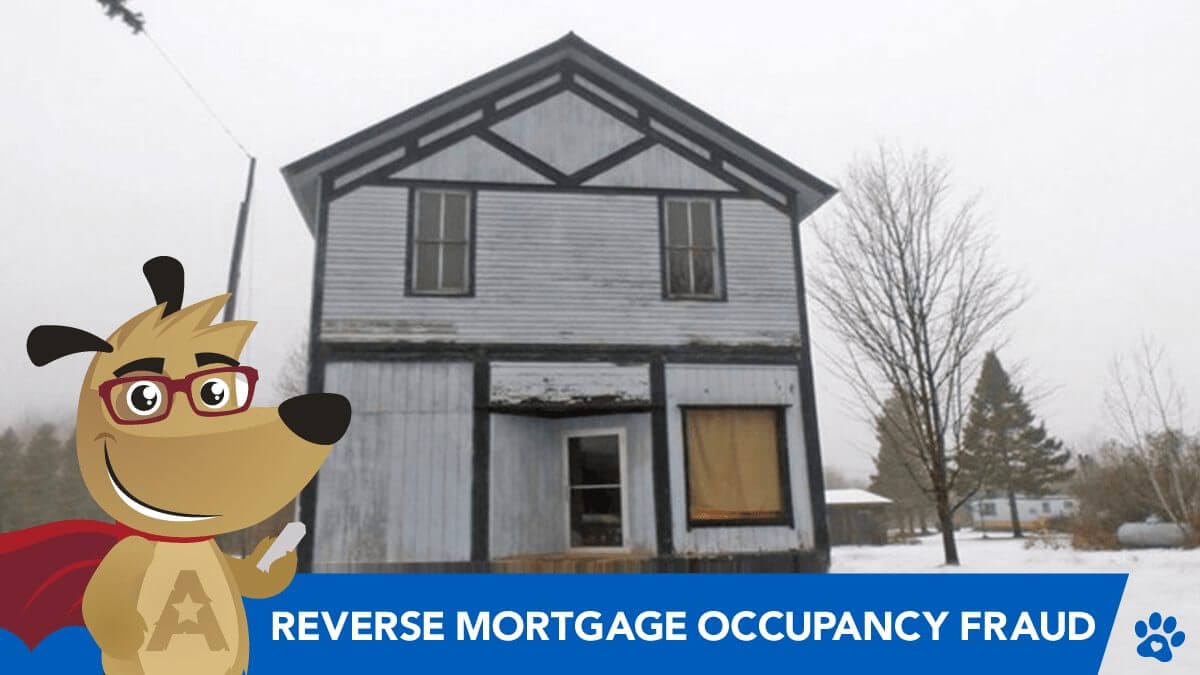
How reverse mortgage occupancy fraud and property neglect threaten the MMI fund

Unpopular Opinion: The Misuse of Reverse Mortgage

The unintended consequences of mismanagement within the reverse mortgage program are profound and far-reaching. Some homeowners who generously allow family members to live rent-free in their homes can face the grim reality of vanished equity — a stark contrast to the financial security they might have otherwise enjoyed. This fraud depletes their home’s value and disqualifies them from future HUD programs due to the financial losses incurred. Heirs, earnest in their efforts to support their elderly family members, are left navigating the aftermath of these decisions.

The Gray Area of Misrepresentation

Concerns arise when discussing long-term occupants like this granddaughter living in the home under questionable circumstances. If these occupants falsely certify the original borrower’s presence to avoid mortgage payments, they exploit a loophole, leveraging the system under false pretenses. This breach of trust raises ethical and legal questions, potentially inviting stricter scrutiny from HUD.

Consequences of Neglect

The deterioration of a property doesn’t occur overnight. It’s often a slow descent, exacerbated by negligence or deliberate destruction. Families and residents who contribute to this decline diminish the property’s value and undermine the senior borrower’s financial legacy. This behavior has far-reaching effects, impacting the immediate family and the broader community of future reverse mortgage borrowers.

Ripple Effect on the HECM Program

When properties are left in disrepair, the financial repercussions extend beyond the immediate family to affect the Mortgage Insurance Premium (MIP) fund. This fund, crucial for the stability of the reverse mortgage program, suffers when properties plummet in value due to neglect. The strain on the MIP fund led to significant program restrictions in October 2017, illustrating the delicate balance between borrower benefits and program sustainability.

Call for Responsibility

This situation underscores the need for responsibility among borrowers and their families. Misuse and neglect of the reverse mortgage program harms the involved parties and jeopardizes the program’s integrity and future. It’s a reminder of the collective duty to uphold the principles of respect and care for property and financial resources, ensuring that reverse mortgages remain a viable and beneficial option for seniors seeking financial security in retirement.

Have Questions About Reverse Mortgage Occupancy Rules? Get expert guidance from All Reverse Mortgage, Inc. (ARLO™) — America’s #1 Rated Lender with a 4.99/5-star rating! Call (800) 565-1722 or click here for your free quote — simple, trusted, 100% secure!

Occupancy FAQs

Q.

Do you have to live in your home for a reverse mortgage?

A reverse mortgage can only be obtained on the primary residence that you live in for most of the year. If you do not reside in the property once the reverse mortgage is placed on the home, you would need to pay off the loan or risk having the loan called due and payable.
Q.

What happens when you move out of a home with a reverse mortgage?

If you have a reverse mortgage on your home and move out of the home, you will be in violation of the terms of the loan agreement. By doing this, the loan will be called due and payable once you have been out of the home for 12 consecutive months. To avoid having the loan go into foreclosure, you would need to refinance the loan to a conventional loan or pay it off in full by either a sale or use of other acceptable funds.
Q.

Can someone live with you if you have a reverse mortgage?

Yes, you are permitted to have others living with you in your home. There are no restrictions on having family members or friends living in the property so long as you are living in the property as your primary residence.
Q.

Can you rent a room in your home with a reverse mortgage?

Yes, you are permitted to rent a room to someone in your home when you have a reverse mortgage. If you have been renting a room to someone for 2 years before applying for the reverse mortgage, you can use that income to help qualify for the loan.
Q.

Can you have a tenant with a reverse mortgage?

Yes, you can have a tenant when you have a reverse mortgage. One example would be if you own a duplex (2-unit home). You can rent out 1 unit so long as you live in the other as your primary residence. You can also rent a room within a single-family residence or condo. The only restriction as it relates to a tenant is when you have a single-family home with a guest house. HUD does not permit you to rent out the main house while living in the guest house. The reverse mortgage borrower must reside within the “main” house.

ARLO recommends these helpful resources:


ARLO Testimonials
America's #1 Rated Reverse Lender Celebrating 20 Years of Excellence.
Author Michael Branson
About the Author, Michael G. Branson | Mike@allreverse.com
Michael G. Branson CEO, All Reverse Mortgage, Inc. and moderator of ARLO™ has 45 years of experience in the mortgage banking industry. He has devoted the past 20 years to reverse mortgages exclusively.

Have a Question About Reverse Mortgages?

Look no further. Michael G. Branson, our CEO, brings a wealth of knowledge directly to you. With a robust 45-year tenure in mortgage banking and 20 years dedicated solely to reverse mortgages, he's the expert you want on your side.
Post your question in the comments below and anticipate a personalized response from Mr. Branson himself, typically within one business day. He's here to illuminate all angles of reverse mortgages, ensuring you're equipped with the knowledge to make informed decisions. Take this opportunity to gain insights from a seasoned professional.

Over 2000 of your questions answered by ARLO™
Ask your question now!

28 Comments on this Article
  1.   Teresa M.
    July 29th, 2024
    My husband lied on the reverse mortgage paperwork, stating he was single when he was not! We live in Texas and were married when he took out the loan without my knowledge. What are my rights? Thank you.
    Reply to Teresa
    • Michael Branson Michael Branson
      July 29th, 2024
      Hello Teresa,
      I cannot give you legal advice, but this situation will have consequences with several parties. My advice to you is to contact an attorney in your area as soon as possible to determine the best course of action. The lender has been defrauded, the title company may need to take some action (they insured a title that is now impaired), and your rights as a spouse have been violated. I honestly do not know the best way to proceed, and you need to speak with someone who can advise you on the legalities of the situation and the best way to move forward.
      Reply to Michael
  2.   Luann
    March 2nd, 2022
    My brother lived in the house with my father who passed away 2 weeks ago. He does not want to tell the bank and wants to wait until the bank finds out then deal with it. I am also an heir and am worried this is not legal. Can you advise?
    Reply to Luann
    • Michael Branson Michael Branson
      March 2nd, 2022
      Hello Luann,
      There is nothing illegal about your brother not telling the lender that your father has passed. As long as he takes no steps to defraud the lender, he is not legally obligated to tell them anything. When I say that, if your brother takes steps to falsify documentation that your father is still there or to obtain money from the loan, then he could be prosecuted.
      But let's talk about your situation. The loan is now due and payable and there is interest accruing on the loan daily. The best thing for heirs most of the time is to pay off the loan as soon as possible to avoid a rising loan balance. That can be with funds they have available to them, by refinancing the loan with a new loan or by selling the home.
      If they do nothing, the balance is growing and when they do pay it off, it is that much more that they owe. They only time this benefits heir is when they have no intention of selling or keeping the home and are just trying to stay in the property as long as possible to avoid paying rent somewhere else.
      If there is equity in the property, your brother staying there is eroding that equity which may be good for him because he isn't paying rent anywhere else but it also affects your inheritance. You are subsidizing your brother's living expenses. I would suggest that you compare the amount owed on the loan to the most probable selling price (you may need to consult with a local real estate professional) and see whether it makes a difference.
      If there is equity in the property, you may want to suggest to your brother that dealing with it sooner rather than later is a much better proposition for both of you and that he will also receive more funds at the sale as well (and not cut into his and your proceeds by accruing additional interest). If there is no equity, remind him not to break the law by falsifying any documents to the lender but there really is no duty to report.
      Reply to Michael
  3.   Angela L.
    December 8th, 2020
    Hi ARLO,
    I have seen a copy of the reverse mortgage agreement take out by my recently deceased mother and her husband. Her financial stake in the house was 70%, his 30%. They were tenants in common on the house title. When they entered into the agreement, they were both listed as jointly residing in the house and her address was stated as being the same. However, she did not reside there, she had already been in aged residential care for over a year and never lived in the house again from that time. Is the reverse mortgage agreement valid if it was entered into fraudulently as this was a deliberate attempt to deceive the mortgage company?
    Reply to Angela
    • Michael Branson Michael Branson
      December 8th, 2020
      Hello Angela,
      The lender might have some recourse if they had suffered a loss as a result of your mom and her husband falsifying documents to get the loan, but it would not invalidate the lien.
      Unless HUD decides to start actively pursuing borrowers after the fact (which they do not now), they would not call the loan due and payable unless the borrowers fail to meet the other requirements of the loan (such as neither borrower occupying the home now or currently late on taxes and insurance).
      And in all honesty, there is no additional loss opportunity to the lender or HUD under these circumstances anyway so no reason for HUD to act. Since you use the age of the youngest borrower to determine loan proceeds, they did not receive any more money by including your mom.
      If her husband was younger, they used his age to determine benefits and if she was younger, adding her to the loan gave them less money.
      In fact, there really is no tangible benefit to doing this unless they had hoped at the time she might return to the home and since she has passed now, he would still be permitted to remain in the home so the risk to HUD has not increased at all.
      Reply to Michael
  4.   Robert G.
    October 31st, 2020
    Hi ARLO. My mother-in-law holds a reverse mortgage. My stepdaughter may be trying to gain ownership of the home by buying it, paying off the reverse mortgage and "giving" her grandmother less than a third of the equity value. Mom does not agree. Can granddaughter move forward on sale with just a forged signature. She knows all the answers to fool the mortgage servicer. She claims she's not doing so but mom is leery. At 92, she does not want to sell.
    Reply to Robert
    • Michael Branson Michael Branson
      October 31st, 2020
      Hello Robert,
      The reverse mortgage is just a loan. It will neither assist nor prevent a fraud scheme on the title of the property.
      Your mother-in-law should seek legal assistance if she feels she is in danger of losing her title because no one "should" be able to do such a thing but as I stated, if there is someone trying to steal her title, she should look into ways to protect herself.
      She can send a letter to her lender and let them know that she feels that she may be targeted for elder abuse and that they are not to provide any payoff information to any party without her express consent.
      There is a possible downside to that though in that if something does happen to her, the lender will be much less likely to work with any family members until the title passes to the rightful heir.
      The attorney can help her with possible trust or other solutions that would protect her further.
      Reply to Michael
  5.   L
    September 22nd, 2020
    Hi. My friend rents a condo of a reverse mortgage situation. The owner (whose son is her POA) has just died.
    The condo association just sent her a certified letter from a lawyer's office to pay the next month's rent to the lawyer's office just named.
    Was written she could be evicted if not payed!
    What does an HOA and their lawyers have to do with this type of payment situation please?
    She has not been evicted by son as we speak. Thank You
    Reply to L
    • Michael Branson Michael Branson
      September 22nd, 2020
      Hello Linda,
      I would strongly suggest you contact an attorney.
      Firstly, if the property is encumbered by a reverse mortgage, it never should have been used as a rental.
      The loan has a Deed of Trust and Assignment of Rents that the owner/borrower had already executed and so I do not know why the HOA would be asking for the rents to be assigned to them.
      I would suggest you contact an attorney to verify and protect your rights at this time.
      Reply to Michael
  6.   Charlene
    August 26th, 2020
    My mother in law is trying to get a reverse mortgage and intends to lie about it being her primary residence, she lives in a nursing home.
    She thinks if her son lives there but he has no ownership that no one will find out. Can she do that? Can the son live there if she does not if they pay taxes etc.
    Reply to Charlene
    • Michael Branson Michael Branson
      August 26th, 2020
      Hello Charlene,
      This is a very bad idea. To falsify information in the attempt to obtain a federally insured loan is a felony.
      How much HUD or the lender would be willing to pursue prosecution would depend on any potential losses. If the son living in the home (your brother?) is part of the plot to defraud the government I do not know if he would be a party to any possible charges.
      HUD and lenders have many ways to verify occupancy and if they do determine the home is not occupied by your mother after the loan closes, they would call the loan due and payable immediately.
      If your mom was unable to refinance or sell the home quickly enough to pay off the loan once it had been called, the loan would go into foreclosure and she could lose the house. Since reverse mortgages start at a low loan to value, if this happened early on, they stand to lose quite a bit of money.
      Aside from the fact that it is never good to commit mortgage fraud which is a felony, I would suggest that you talk to mom and the occupant about selling the home and downsizing for him.
      If mom is not moving back to the property, this whole situation sounds like it is only for the benefit of her son.
      It would probably be much better for each of them to find a way to help him legally than to commit a crime that could end up hurting mom or the estate financially as well as any legal liability for those involved in the fraud.
      Reply to Michael
  7.   Doyle W.
    July 14th, 2020
    In 2015 my sister talked my mom and dad into taking a reverse mortgage on their home. At that time, my dad had suffered lack of oxygen causing some brain damage rendering him unable to make such a financial decision and my mom had been diagnosed in 1990 with Alzheimer's. She was unable as well to make such a financial decision.
    Over the phone my dad spoke with the reverse mortgage company, giving my sister permission to speak for them. I was not made aware of this situation of my parent's financial decisions concerning the reverse mortgage since my three sisters had motives for this mortgage to benefit themselves. Both my parents have since died.
    After becoming aware of the fact the reverse mortgage being taken out I have been trying to do anything possible to save their home as I believe the reverse mortgage is not legal and binding due to the fact that both my parents were incompetent when the reverse mortgage was taken out on their home. Neither of my parents were able to benefit from the money acquired through the reverse mortgage.
    My question is this Is there anything I can do to prove that this reverse mortgage company acted fraudulently since my mom and dad were both mentally incompetent to make such a decision, as to have a mortgage on their property.
    My dad had worked so hard to make sure my mom would be financially stable if he should die before she did. The reverse mortgage was a HUD loan I and my sister has been indicted on charges of elderly financial exploitation, but she has died as well, before her case went to court. Can you tell me if there is any way that I can possibly save my parents property since I believe that the whole financial scheme was fraudulent?
    I have since found out that my parents' mortgage is not the only one that was fraudulent, and that company has been court ordered to pay back millions of dollars due to their fraudulent conduct.
    Reply to Doyle
    • Michael Branson Michael Branson
      July 14th, 2020
      Hello Doyle,
      I am sorry but this is not a question about the loan itself but rather a legal question and for that I must refer you to an attorney for answers. I honestly could not say who committed what fraud, if any, and what your legal rights would be at this point.
      If mom and dad had given your sister(s) power of attorney prior to losing capacity, they could by law and by HUD rules apply for the reverse mortgage on mom and dad's behalf. Most states have laws that make those with power of attorney and executors liable to other heirs for their actions but I honestly can't tell you what that would entail in your state if your state has such laws as well.
      If mom and dad had never granted Power of Attorney, the next question then would be did the lender commit fraud by granting the loan or did your sister(s) commit fraud against the lender by obtaining the loan on a fraudulent basis.
      Again, all questions I could not begin to answer, nor do I know what the remedy would be in such a case under the state laws where the property is located.
      You need to speak with a licensed attorney knowledgeable in such matters and if the property has not gone through the foreclosure process yet, the sooner you speak with the attorney, the better!
      Reply to Michael
  8.   Tricia
    January 21st, 2020
    My mother died mid-November 2019 and she had a reverse mortgage. My brother is executor and refuses to speak to me about anything. I am 1/3 beneficiary as is he. When must he notify the lender that she has passed?
    Reply to Tricia
    • Michael Branson Michael Branson
      January 21st, 2020
      Hello Tricia,
      Typically, the lender becomes aware of the borrower's passing through Social Security roles and other sources but there is no specific requirement of heirs since they are not a part of the reverse mortgage agreement.
      If heirs commit no fraud by falsifying documentation to indicate that your mom is still in the home when she is not, there really is no direct liability for simply not notifying the lender while you are getting the affairs in order.
      My suggestion though is to realize that once the lender learns of the passing of the borrower, they will make their decisions as to what time frames they will enforce based partly on the actions of the heirs.
      If the heirs have made good faith efforts to obtain a clear title to sell the home or otherwise to pay off the loan, the lender is more apt to work with the heirs if needed to complete the sale.
      If the lender feels that the heirs have been duplicitous in their dealings with the lender, it will most likely proceed with calling the loan due immediately which could lead to additional charges due to foreclosure proceedings.
      Due to the fact that interest continues to accrue the entire time the loan is outstanding and any actions that the lender must take (foreclosure, etc.) bring with them additional costs which cut into your equity, my advice would be to proceed without delay to either begin the process to repay the obligation with a refinance, other funds or a sale of the home as quickly as you are able.
      This will require your brother to clear the title (and that may require a probate) so that he can sell or refinance the loan so he may already be working on that.
      Reply to Michael
  9.   Judith D.
    December 23rd, 2019
    Can the neighbor, of a NOVAD/HUD homeowner, in a private community, have the homeowner taken out of their home because they may have a complaint against the homeowner?
    Reply to Judith
    • Michael Branson Michael Branson
      December 23rd, 2019
      Hello Judith,
      Not based on the terms of the loan. The lender/HUD have no provisions in their loan terms for removal if your neighbors become angry or otherwise feel they want you to move. The same is true for any other loan. Your neighbors can't simply call your lender if they determine that they no longer wish to have you as a neighbor, and have you removed.
      I can't comment on any recourse that may be available to you based on the nature of your grievances and the community rules and by-laws but you can check with your association to see what if any violations may have occurred and what can be done to rectify the issues.
      Reply to Michael
  10.   B.
    October 6th, 2019
    My grandmother had to move out of her house because it was too big for her she downsized to a condo. She was unaware you were unable to rent a home on a reverse mortgage. Now she has tenants in there and they refuse to pay the rent for almost 8 months now. They're basically squatting. She's afraid to get the cops involved because of what that might mean for the reverse mortgage if the bank find out. If the bank does happen to find out, what are the consequences other than them possible making her start paying back the loan?
    Reply to B.
    • Michael Branson Michael Branson
      October 6th, 2019
      Good Morning,
      If the lender determines that the home is not owner-occupied, they will call the loan due and payable. Your grandmother should resolve the issue before she receives the next occupancy certification. Up until now, she is just in violation of the terms of the loan which can allow the lender to call the loan due and payable and that is their only recourse.
      If she signs a certification that says she is living in the home and she is not, she has falsified documentation to the lender and HUD and that could be more serious. The loan is a non-recourse loan under normal circumstances but in the case of fraudulent actions on the part of the borrower, I cannot tell you that they would still not have any additional recourse.
      Reply to Michael
  11.   Rene E.
    September 4th, 2019
    I have a very close elderly friend. He was like a father to me growing up. I was also close with his wife who passed away. His daughter contacted me, she was living in his house with her son, and her new husband. I found out there was a reverse mortgage on the home.
    She asked me to move in to be with her son who is 20 as she was moving to Florida. Her dad, the owner, was supposed to come back. The house was empty except for the owner's grandson and me. I was paying her 1000. Per month. Then her son started renting the rooms, I decided I was moving out. Now I find out that all the rooms are being rented, the 90-year-old father will not be brought back. I don't think he knew this. I'm concerned for him. What can I do?
    Reply to Rene
    • Michael Branson Michael Branson
      September 4th, 2019
      Hello Rene,
      The loan requires the senior borrower to live in the home or it is a violation of the terms of the mortgage. As soon as the lender discovers that the father is no longer living in the home, the loan will be called due and payable.
      If the grandson has been falsifying documentation to continue to live in the home under the terms of the mortgage so that the lender is unaware of the grandfather's absence, he is committing mortgage fraud and it will be up to the lender and HUD to determine if they wish to prosecute.
      Reply to Michael
  12.   Audrey
    August 12th, 2019
    Can I live in my reverse mortgage house and rent another property for a family member?
    Reply to Audrey
    • Michael Branson Michael Branson
      August 12th, 2019
      Hello Audrey,
      If you occupy the home with the reverse mortgage as your primary residence, there are no restrictions about on what you can spend your money. If you want to help a family member rent another property, that is up to you.
      Just remember though that if your expenses on the other property cause you not to be able to pay your property taxes, your insurance on time or impair your ability to reasonably maintain your home, you could cause the loan to fall into default.
      Make sure that by agreeing to help your family member you are not placing your own home in jeopardy.
      Reply to Michael
  13.   Lisa D.
    August 7th, 2019
    My father died 19 months ago. It's a reverse mortgage. My sister continues to live there. She has not reported his death. What will happen to her when the bank discovers this?
    Reply to Lisa
    • Michael Branson Michael Branson
      August 7th, 2019
      Hello Lisa,
      If your sister has not reported the passing and the lender has just not acted, she has not really done anything wrong. If she has filed documents such as the annual occupancy certification to attest that your parents are still living in the property and sent that back to the lender, she has committed fraud and is subject to prosecution.
      What will happen? I can't say. I do know that his has become an increasingly big problem for HUD and there is talk of cracking down but whether or not HUD will prosecute those who commit crimes by falsifying documents to obtain further benefits for which they do not qualify, I cannot say at this time.
      Reply to Michael
  14.   Catherine
    July 10th, 2019
    I know someone that is living in her mother's home that has a reverse mortgage and her mother lives somewhere else - is this legal?
    Reply to Catherine
    • Michael Branson Michael Branson
      July 10th, 2019
      Hello Catherine,
      The act of living in the home is not illegal in and of itself. It is a violation of the terms of the loan and they may have committed mortgage loan fraud to hide that fact which would be illegal.
      The loan is for seniors over the age of 62 so that they may live in their homes for life without making a payment and the loan becomes due and payable once the last remaining borrower on the loan permanently leaves the residence.
      The lender sends a certification to the home annually that the borrower must complete and sign stating that they are still living in the home as their primary residence. If this person you reference is returning that affidavit with false information, she is committing mortgage fraud and is subject to prosecution if the lender or HUD should ever choose to do so.
      The reverse mortgage program has suffered huge losses over recent years and many of those losses are avoidable because they come from family members and others who game the system just as you are describing here. The loan amounts for seniors is decreasing and the qualification has become much more difficult due to the losses.
      It is difficult to see some borrowers who really could use the program no longer receive adequate funds to meet their needs knowing there are those out there who are doing exactly what you describe. The loan is not and never was intended to be a multi-generational loan nor is it intended for children of reverse mortgage borrowers to be able to continue to live in the property payment-free after the last borrower on the loan leaves the property.
      People who do this hurt not only taxpayers who have to cover the losses but also other senior borrowers when the programs won't cover their legitimate needs.
      Reply to Michael

Leave a Reply to This Article