


A+ BBB Accredited
★★★★★ 4.9/5 from 1,200+ reviews
HUD-Approved · NMLS #13999
Explore All Reverse×
Programs
How It Works
Calculators
Resources
Why All Reverse
HUD-approved direct lender · NMLS #13999
4.9/5 from 1,200+ reviews
ARLO

See What Your Home Could Do for You

Your instant quote includes eligibility, real-time rates
Michael G. Branson Michael G. Branson, CEO of All Reverse Mortgage, Inc., and moderator of ARLO™, has 45 years of experience in mortgage banking, with the past 20 years devoted exclusively to reverse mortgages. A Forbes Real Estate Council member, he developed the industry's first fixed-rate jumbo reverse mortgage and has been featured in Forbes, Kiplinger, the LA Times, and Yahoo Finance. (License: NMLS# 14040)
Cliff Auerswald Cliff Auerswald, President of All Reverse Mortgage, Inc., and co-creator of ARLO™ — the industry's first real-time reverse mortgage pricing engine — has 27 years of experience in mortgage banking, with 20+ years focused exclusively on reverse mortgages. A recognized expert in reverse mortgage technology and consumer education, he has been featured in Kiplinger, Yahoo Finance, Realtor.com, and HousingWire. (License: NMLS# 14041)

Learn How Reverse Mortgages May Affect Your Taxable Income

Michael G. Branson, CEO of All Reverse Mortgage
CEO · 45 yrs in mortgage banking
Cliff Auerswald, President of All Reverse Mortgage
President · All Reverse Mortgage Inc.
3 min read Fact Checked HUD-Lender #26031-0007 18 comments

The economic downturn has taken its toll on many American households and especially on retirees. In fact, one study from Wider Opportunities for Women indicates that more than half of older households have incomes that don’t cover their basic living expenses.

To help, many baby boomers are turning to the equity they’ve built up in their homes to help by using a federally-insured Home Equity Conversion Mortgage (HECM) reverse mortgage.

Reverse Mortgages don’t necessarily affect your income taxes but before you take out the loan, it’s important to consider how the proceeds might affect your income eligibility for programs such as Social Security, Medicare, Medicaid, and Supplemental Security Income (SSI).

Here are three of the most common questions we receive about how a reverse mortgage can impact government programs.
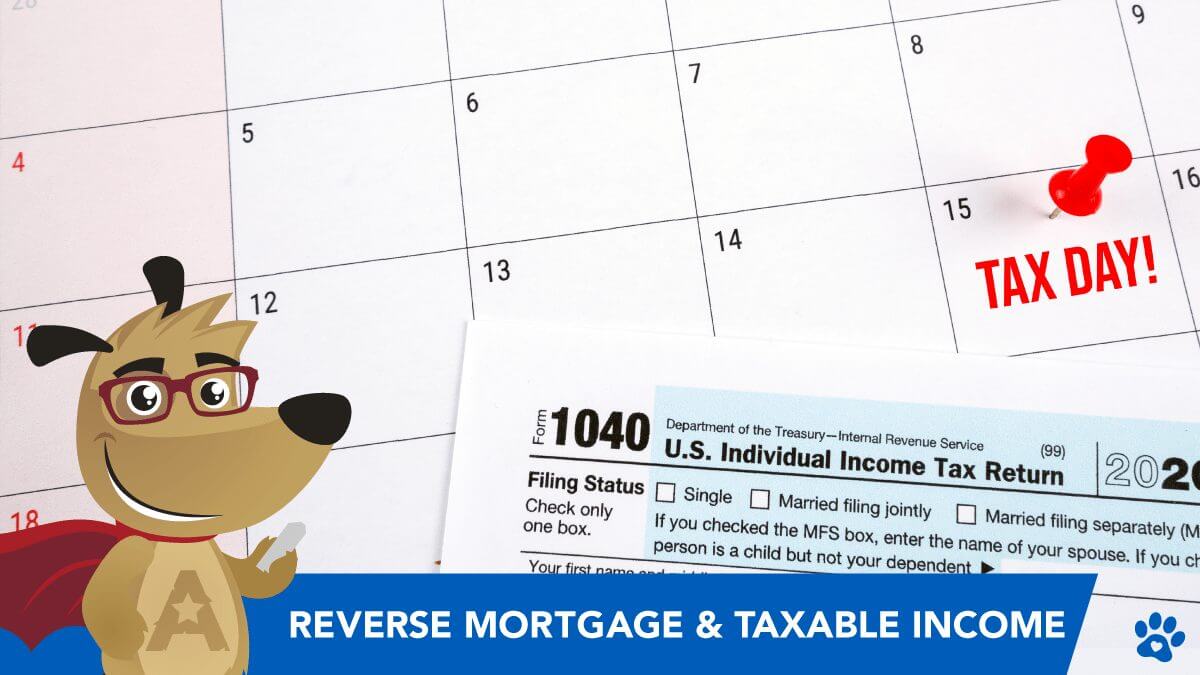

How Reverse Mortgages Affect Your Taxable Income


Will I have to pay taxes on my reverse mortgage proceeds?

Answer: Money received through a reverse mortgage isn’t taxable because the Internal Revenue Service (IRS) considers it to be a “loan advance” rather than income.


Can I still receive Medicare and Social Security benefits?

Answer: Medicare and Social Security are both entitlement programs that consider your age rather than your income and assets.

That means that no matter your financial circumstances—and whether or not you have a reverse mortgage loan—you will be able to receive benefits from these two programs.


How will a reverse mortgage affect my eligibility for government assistance programs?

Answer: Even though your loan proceeds aren’t technically considered taxable, they could still affect your eligibility for some government assistance programs.

Programs such as Medicaid and Supplemental Security Income (SSI) are means-tested, so both your income and your assets are considered when determining whether or not you qualify.

Loan proceeds can be accessed in a few different ways: in a lump sum, as a monthly term or tenure payment, as line of credit, or in some combination of these options.

If you opt for a lump sum payment and put your loan proceeds in a savings account, those funds may make you ineligible for Medicaid and SSI because they may be viewed as an asset.


Reverse mortgages, benefits programs, and you

Even if you currently qualify for or receive Medicaid and SSI, you don’t need to rule out a reverse mortgage quite yet.

Rules regarding the amount of assets you can have while still qualifying or maintaining eligibility for Medicaid and SSI vary from state to state, so it’s best to consult a trusted tax or financial advisor to see how a reverse mortgage could affect your situation.

Federal Housing Administration-approved counselors may also be able to help you determine the alternative government programs you may qualify for using the National Council on Aging Benefits Checkup tool.

If you’re considering a reverse mortgage and are curious about how this kind of loan could help your particular situation, we’re here to help.


Other Articles in this category:


ARLO Testimonials
America's #1 Rated Reverse Lender Celebrating 20 Years of Excellence.
Author Michael Branson
About the Author, Michael G. Branson | Mike@allreverse.com
Michael G. Branson CEO, All Reverse Mortgage, Inc. and moderator of ARLO™ has 45 years of experience in the mortgage banking industry. He has devoted the past 20 years to reverse mortgages exclusively.

Have a Question About Reverse Mortgages?

Look no further. Michael G. Branson, our CEO, brings a wealth of knowledge directly to you. With a robust 45-year tenure in mortgage banking and 20 years dedicated solely to reverse mortgages, he's the expert you want on your side.
Post your question in the comments below and anticipate a personalized response from Mr. Branson himself, typically within one business day. He's here to illuminate all angles of reverse mortgages, ensuring you're equipped with the knowledge to make informed decisions. Take this opportunity to gain insights from a seasoned professional.

Over 2000 of your questions answered by ARLO™
Ask your question now!

18 Comments on this Article
  1.   Roz
    October 7th, 2024
    If I pay off my reverse mortgage, is all the interest I paid deductible? In other words, since I've had the loan since 2017, can I deduct the interest from 2017 to 2024? Do I need receipts for the improvements I made to the house?
    Reply to Roz
    • Michael Branson Michael Branson
      October 17th, 2024
      Hello Roz,
      Interest is deductible when it's paid, not when it accrues. So, the timing of the payment is what matters. However, please keep in mind that we aren't accountants, and mortgage licensing laws prevent us from offering tax or legal advice. Therefore, I recommend consulting with a qualified tax accountant or tax preparer to determine which deductions may be available to you.
      The IRS has complex rules regarding income taxes and deductions, and we don't provide tax advice because your specific circumstances dictate your tax situation and potential deductions during any given period. Even if we were permitted to offer tax advice, we wouldn't know your financial situation well enough to advise you on which expenses are deductible on your returns, or how much of your interest might be deductible under the IRS's evolving guidelines.
      When you pay the interest at the time the loan is repaid, that's when the lender will issue tax documents showing the interest paid (rather than over the years you held the loan). This documentation is what you should give to your tax preparer.
      Reply to Michael
  2.   Patty
    April 15th, 2023
    Hi Arlo,
    Do I still have to make a monthly mortgage payment? Or do I request a monthly withdrawal to cover the monthly payment?
    Reply to Patty
    • Michael Branson Michael Branson
      April 21st, 2023
      Hi Patty,
      There are no monthly payments required with a reverse mortgage. The interest accrues and is added to the loan balance to be paid when you sell the home, refinance the loan, or when your heirs do after you pass.
      There is no prepayment penalty so you can make a payment at any time you wish to keep the balance from growing if that is your preference, but no monthly payment is required on a reverse mortgage.
      You do need to pay your taxes and insurance as they come due though as timely payment of all other property charges (taxes, insurance, HOA- if any, etc.) is a requirement of the loan).
      Reply to Michael
  3.   Jaime R.
    December 15th, 2022
    Is the money you receive from a reverse mortgage taxable?
    Reply to Jaime
    • Michael Branson Michael Branson
      December 15th, 2022
      Hello Jaime,
      I am forbidden by licensing law to give legal or tax advice, but I would advise you to speak with your financial advisor or tax preparer. Your reverse mortgage is a loan and just like any other loan, I am sure they will tell you that the proceeds are not taxable, but you need to get it from them because they will need to look at your total situation to give you a complete answer based on your individual circumstances.
      Reply to Michael
  4.   Susan M.
    May 27th, 2021
    The money is not taxable but is it considered income by the IRS ? ( to put you in a higher tax bracket ?)
    Reply to Susan
    • Michael Branson Michael Branson
      May 28th, 2021
      Hello Randy,
      I cannot give you legal or tax advice, I am forbidden by licensing law from doing so. I can tell you that any draws you take from your reverse mortgage are loan draws, not income so if you are able to bring down your need to pull cash from your taxable sources, you are probably achieving the goal you just expressed but without knowing your circumstances, I cannot say to what extent nor would I for the reasons already stated. To determine exactly how you would benefit from borrowed funds as compared to drawing taxable income especially for your individual circumstances, you really need to consult with your tax professional.
      Reply to Michael
    • Michael Branson Michael Branson
      June 1st, 2021
      Hello Susan,
      The article is not saying that the reverse mortgage proceeds will put you into a higher tax bracket. The money you receive from a loan is not "income", reverse mortgage proceeds are funds advanced from a loan. Borrowed funds are those which must be repaid at some point in the future, the same as any other loan. Otherwise, people would need to start reporting all loans, credit cards and any other credit they received as income - which is not the case either.
      However, if you are on a needs-based program whereby your ability to qualify for the program depends on you meeting certain tests such as the amount of money you have in your bank accounts (Medicaid, SSI, etc.), then you do need to be concerned that you do not borrow enough funds and place them into the bank so that you exceed the maximum allowed to qualify for the program. Again, the reverse mortgage proceeds are not income but on some of these programs if you were to allow funds to accumulate in your bank account, you could cause yourself to become ineligible for the benefits.
      This doesn't mean you cannot get the loan to help you as well, it just means that you need to be a little more careful about when you request draws from the line of credit and the amount you draw than the average borrower who is not taking part in a means-tested program. How do you go about doing that? You just make your draws and your expenditures coincide with your bank accounts. Everyone's bank accounts are produced at different times and although most banks use a month-end cut-off date, you cannot count on this being the case.
      Check your bank statements to be sure of the date your statements are produced each month. If they cut off on the last day of each month, then you can use the 1st as your funds request date which will mean that the lender will deposit your requested funds into your account by the 5th. You must be sure that you use these funds before the end of the cycle at which time the next bank statement will be produced (the end of the month). If you still have funds remaining in the account after that above the amount for which your program allows to remain eligible, you run the risk of losing your eligibility.
      So only taking the draws you need, spending the entire amount in the month you made the draw on the required expenditures, and then keeping your balance within the program mandated ranges for eligibility allows borrowers on the means-tested programs to also benefit from a reverse mortgage for those times when they need additional capital.
      Reply to Michael
    •   Mary F.
      January 13th, 2023
      Hi Arlo!
      I found out that a reverse mortgage is not taxable, which is great! We did not get any money out at all just stopped the monthly payment. I was confused that I don't have to claim any $$, but what about the closing costs that AAG added on to the mortgage, is that deductible?
      Reply to Mary
      • Michael Branson Michael Branson
        January 17th, 2023
        Hello Mary,
        The reverse mortgage is a loan, it is not income. Any money you receive with your reverse mortgage is money you borrowed, not income paid to you and therefore not taxable. About your specific tax situation and deductibility of any costs, you need to speak to your accountant as I cannot by law give any tax or legal advice.
        Even if I was not forbidden also by our licensing laws from giving tax advice, I would not try to give a one-size fits all answer to anything that might change from borrower to borrower based on their circumstances as is the case with taxes based on income, deductions, etc.
        There is also the question of when certain things are paid or added to the loan as you put it. Your accountant will need to discuss with you when you can claim an expense for tax purposes which also includes interest, etc. if you haven't paid it yet.
        Reply to Michael
  5.   Randy C.
    May 24th, 2021
    My retirement income is from social security and before-tax IRA funds. Can a reverse mortgage be used to reduce my taxable income including my taxable SSI.
    Reply to Randy
  6.   Scarlet B.
    April 15th, 2021
    My 95 yr old mother-in-law has a reverse mortgage. Needs medical assistance for living in her home. Would she qualify to receive assistance from different agencies in California.
    Reply to Scarlet
    • Michael Branson Michael Branson
      April 19th, 2021
      Hello Scarlet,
      The reverse mortgage itself should not affect her ability to apply for any other programs for which she qualifies though so I would suggest that you contact whatever agency you are considering and give them a shot.
      The only thing I can tell you for certain is that some programs such as Medicaid have qualification criteria that limits the amount of money the borrower may have in the bank to be eligible but even then, borrowers with reverse mortgages are still eligible if they do not take money out of their loan and leave it in a bank account thereby artificially inflating their liquid asset position.
      Those borrowers usually just need to be careful not to take any more money from their loan than they plan to spend each month so that their ending balance is not above the maximum allowable to be eligible for the program.
      If you are not sure about the program eligibility requirements relating to those to which programs you intend to apply, you can usually contact a counseling agency or a financial advisor who works with the programs as well for guidance before you apply.
      Reply to Michael
  7.   Bryan C.
    March 19th, 2021
    Should a couple who are going to get a grey divorce get a reverse mortgage before or after Medicaid application? The reverse mortgage payout is exactly the same as outstanding mortgage so no asset implications.
    Reply to Bryan
    • Michael Branson Michael Branson
      March 23rd, 2021
      Hello Bryan,
      We are forbidden by licensing law to give tax or legal advice and in all honesty, even if we were not with all the possible changes being discussed at this time, I would not want to try to even take a stab at it! I would need to refer you to your accountant or tax attorney for advice based on your circumstances.
      Reply to Michael
  8.   Ed P.
    November 13th, 2019
    Do I have to report reverse mortgage proceeds to the IRS?
    Reply to Ed
    • Michael Branson Michael Branson
      November 13th, 2019
      Hello Edd,
      I cannot give you tax advice, I am not a CPA or a tax attorney and since I am not licensed to give you tax advice, I must refer you to a professional who is licensed to give that advice. A reverse mortgage is a loan though and not income so the proceeds would be treated like any other loan and not the same as income you receive from a job.
      Reply to Michael

Leave a Reply to This Article