
Think You Don’t Qualify? You May Still Have Options
 |
Michael G. Branson, CEO of All Reverse Mortgage, Inc., and moderator of ARLO™, has 45 years of experience in mortgage banking, with the past 20 years devoted exclusively to reverse mortgages. A Forbes Real Estate Council member, he developed the industry's first fixed-rate jumbo reverse mortgage and has been featured in Forbes, Kiplinger, the LA Times, and Yahoo Finance. (License: NMLS# 14040) |
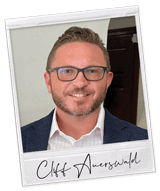 |
Cliff Auerswald, President of All Reverse Mortgage, Inc., and co-creator of ARLO™ — the industry's first real-time reverse mortgage pricing engine — has 27 years of experience in mortgage banking, with 20+ years focused exclusively on reverse mortgages. A recognized expert in reverse mortgage technology and consumer education, he has been featured in Kiplinger, Yahoo Finance, Realtor.com, and HousingWire. (License: NMLS# 14041) |
5 Options When You Don’t Qualify for a Reverse Mortgage (2025 Guide)

 Michael G. Branson, CEO of All Reverse Mortgage, Inc. and moderator of ARLO™, has 45 years of experience in mortgage banking, with the past 20 years devoted exclusively to reverse mortgages. A Forbes Real Estate Council member, he has been featured in Forbes, Kiplinger, the LA Times, and Yahoo Finance. (License: NMLS #14040)
Cliff Auerswald, President of All Reverse Mortgage, Inc. and co-creator of ARLO™ — the industry's first real-time reverse mortgage pricing engine — has 27 years of experience in mortgage banking, with 20+ years focused exclusively on reverse mortgages. (License: NMLS #14041)
Michael G. Branson, CEO of All Reverse Mortgage, Inc. and moderator of ARLO™, has 45 years of experience in mortgage banking, with the past 20 years devoted exclusively to reverse mortgages. A Forbes Real Estate Council member, he has been featured in Forbes, Kiplinger, the LA Times, and Yahoo Finance. (License: NMLS #14040)
Cliff Auerswald, President of All Reverse Mortgage, Inc. and co-creator of ARLO™ — the industry's first real-time reverse mortgage pricing engine — has 27 years of experience in mortgage banking, with 20+ years focused exclusively on reverse mortgages. (License: NMLS #14041)
If you’ve applied for a reverse mortgage and found that you don’t qualify — or the amount offered isn’t enough to pay off your existing mortgage — you’re not alone. Many homeowners are surprised when changing interest rates or updated HUD limits reduce the proceeds they’re eligible for.
The good news? Even if you don’t qualify today, you still have options. In this guide, we’ll explore five strategies that can help you move forward.

Why You Might Not Qualify for a Reverse Mortgage
Several factors determine how much money you receive from a reverse mortgage:
- Your age (the older you are, the more you can typically borrow)
- Your home value and HUD’s annual lending limit (the current limit is $1,249,125)
- Interest rates at the time of application (higher rates reduce proceeds)
- Your current mortgage balance and ability to pay off existing liens
Sometimes, even when your home value rises, higher interest rates or updated lending limits can reduce what you qualify for.
Expert Insight from Michael Branson, CEO: “We’ve always cautioned homeowners not to wait for age or HUD limits alone, because rising interest rates can take away borrowing power much faster than age can add it.”
5 Options If You Don’t Qualify for a Reverse Mortgage
1. Pay Down Your Loan Balance
If you’re just short of qualifying, consider using savings to pay down part of your current mortgage. For example, if your balance is $100,000 but the reverse mortgage only covers $90,000, paying off that $10,000 can make the deal work.
The money doesn’t disappear — it builds equity in your home and reduces the interest you’ll owe on the new reverse mortgage. Eliminating your monthly mortgage payment may also help you rebuild your savings over time.
Expert Insight from Michael Branson, CEO: “Any money you use to pay down your mortgage balance is not lost — it goes right back into your home equity and reduces interest on your reverse mortgage.”
2. Use Gift Funds from Family
HUD allows family members to provide gift funds (not loans) to help reduce your mortgage balance. For many families, contributing to help a loved one stay in their home is easier — and less expensive — than covering relocation or assisted living costs.
Since heirs often inherit the home’s equity anyway, gifting funds can be a practical solution.
3. Sell Assets to Cover the Shortfall
If family gifts or savings aren’t an option, selling assets you no longer use may help. Many homeowners have valuable items — vehicles, collectibles, or even a second property — that can be sold to raise the necessary funds.
While not feasible for everyone, it’s worth considering if it allows you to keep your home without monthly mortgage payments.
4. Downsize with a Reverse Mortgage for Purchase
If your current home no longer fits your needs, you may benefit from downsizing and using a HECM for Purchase. This program lets you buy a new home with a reverse mortgage — often with no monthly mortgage payment required.
Downsizing could mean moving closer to family, choosing a single-story home, or finding a property that’s easier to maintain. For many older homeowners, this option provides both financial relief and lifestyle improvements. Learn more: Reverse Mortgage for Purchase
Expert Insight from Michael Branson, CEO: “Many homeowners overlook the HECM for Purchase option, but downsizing can free up equity and provide a home that better fits your lifestyle.”
5. Wait and Reapply
You can also choose to wait until you’re older, since age increases the amount you qualify for. However, this approach carries risks:
- HUD rules can change
- Interest rates may rise, reducing your proceeds
- Home values may fluctuate
For example, each year of age may add around $4,000 in borrowing power on a $700,000 home. But if rates rise by even 0.25%, you could lose $10,000 or more in available funds.
While waiting is an option, it’s not always the safest bet — especially when interest rates are unpredictable.
Frequently Asked Questions
Why would someone not qualify for a reverse mortgage?
If you don’t qualify, is it worth applying with another lender?
What are the occupancy requirements for a reverse mortgage?
What are the income requirements for a reverse mortgage?
Reverse mortgage loans utilize a residual income analysis for qualifications in lieu of a debt-to-income ratio analysis that is utilized for the majority of other traditional mortgage loan products. The required residual income is broken down by the region of the country where your property is located (Northeast, Midwest, South, West) and by the number of residents occupying your property (1, 2, 3 & 4 or more). The reason for this is that energy costs for utilities vary by region, and the energy costs also increase based on the number of occupants in the property.
| Family Size | Northeast | Midwest | South | West |
| 1 | $540 | $529 | $529 | $589 |
| 2 | $906 | $886 | $886 | $998 |
| 3 | $946 | $927 | $927 | $1,031 |
| 4 or more | $1,066 | $1,041 | $1,041 | $1,160 |
For example, if you are a family of 2 living in the state of California, your residual income required would be $998 per month. This means that if you have total expenses (total expenses include, but are not limited to, Taxes, Insurance, HOA (if any), consumer debt showing on your credit and $0.14 per square foot of your home for utilities.) of $1,000 per month and a total income of $2,000 per month you would meet the residual income requirements. $2,000 – $1,000 = $1,000 per month residual, which meets the $998 per month requirement. For a traditional loan, that would give you a 50% debt-to-income ratio and likely would not qualify for most loan programs.
Is good credit required to get a reverse mortgage?
What are alternatives to a reverse mortgage when you don’t qualify?
Final Thoughts
Not qualifying for a reverse mortgage doesn’t mean the end of the road. Whether you pay down your balance, accept family help, sell assets, downsize, or wait and reapply, you still have paths forward.
Not Sure If You Qualify? At All Reverse Mortgage, Inc., we walk you through every detail — honestly and without pressure. Call us Toll-Free at (800) 565-1722 to speak with our licensed experts, or get an instant quote using our free reverse mortgage calculator — no personal information required.
Related Resources


June 26th, 2023
June 26th, 2023